
Your elbow feels better. Four things want the credit.
Three weeks in and the elbow is genuinely better. That is real, it is measurable, and it is yours. It also tells you almost nothing about what was in the vial — because you are running an experiment with one piece missing, and four separate things are queuing up to take the credit.
In this article ▾

This is the written version of I Found The Best Way to Know If Your Peptide Actually Works — watch it instead if you’d rather.
Three weeks in, and your elbow feels better. Genuinely, properly better. You noticed it doing something ordinary and thought, hang on, this is brilliant.
And you have learned almost nothing about what is in your vial.
That is not me being clever at your expense — I would have learned nothing either. The problem is not you. It is that you are running an experiment with one piece missing, and four separate things are queuing up to take the credit for how that elbow feels, all of them invisible from the inside.
Before anything else: I am not about to tell you it was all in your head. Your elbow is better. That is real, it is measurable, and it is yours. The only question on the table is what gets the credit, and that is a different question with a different answer.
The group you have not got
A trial has two groups. One gets the thing, one does not. The second group is not a formality — it is the entire source of the answer, because it is the only thing that tells you what would have happened anyway.
You have one group. You. With no version of yourself who skipped it. So, the queue — and the first one starts before you even opened the box.
You started measuring at your worst week
Think about the day you decided to buy it. Nobody orders anything in a good week. You order it in the week the elbow is the worst it has been in two years.
Which means you started measuring at your personal worst point, and there is a boring statistical name for what happens next. Regression to the mean. Anything that varies — and pain varies enormously — tends to sit closer to its own average the next time you look at it. Not because anything changed. Because it was at an extreme, and extremes do not last.
That is not medicine, it is arithmetic. And it is strongest exactly when you selected the moment by how bad it was — which is precisely what “I finally did something about it” means.
The eight questions to ask of any study before you believe its headline. Comes with the other three free guides, for one email.
Get the free guidesMost of it gets better on its own
Suspect two is the same idea with a longer clock. Take ordinary back pain, pooled across 33 cohorts and 11,166 people. Average pain starts at 52 out of 100. Six weeks later it is 23. At six months, 12. At a year, 6.
More than half of it gone in six weeks, on no treatment at all. And six weeks is roughly when somebody finishes their first run of something and goes online to say it worked. That is not a coincidence, it is a calendar.
The needle is doing some of the work
This is the one I did not expect when I went looking. The injection itself is doing work, independent of what is in it, because all placebos are not equal. A fake pill and a fake injection do not produce the same result, and the gap is not small. In migraine prevention, across a hundred-odd trials, researchers compared the placebo arms against each other. A dummy pill: about 22% responded. Sham acupuncture — needles, no actual treatment: 38%. Sham surgery: 58%.
There was nothing in any of them. The only variable was how much of a production it was. And a subcutaneous injection you prepare yourself, on a schedule, with a syringe, is a long way up that ladder from swallowing a tablet.
To be straight with you: nobody has run that study on self-injected peptides. I am reasoning across from migraine and knees. But the direction is consistent everywhere anyone has looked.
Then there is the one I find slightly unbelievable every time I read it. Twelve Parkinson’s patients, two injections of salt water, both described as a new drug — one presented as cheap, one as expensive. Both improved their movement scores, measured by an assessor who did not know which was which. The expensive salt water worked better. Their brain scans came out different. There was nothing in either syringe.
Measuring something objective does not save you
At this point you are an engineer, or at least engineer-adjacent, so you have already solved it: stop relying on how you feel, measure something objective, get a number. That was my instinct too, and it does not work. Here is exactly where it fails.
In insomnia trials, people were wired up in a sleep lab — proper polysomnography, electrodes, about as objective as this gets. Pool what the placebo groups did on those machines and they fell asleep about fourteen minutes faster, were awake about fourteen minutes less during the night, and got about thirty minutes more sleep. The authors’ own conclusion is the line I would put on a wall: objective measures do not appear to protect against placebo responses.
So the tracker on your wrist will not save you. It will measure a real change. It just will not tell you what caused it, because it is measuring a body that already knows it started something.
There is a nastier version of that, too: in antidepressant trials, a placebo built to mimic the side effects collapsed the drug’s apparent advantage, because side effects tell you which group you are in.
The honest size of all this
There is a version of this article that overclaims, and it is the one where I imply placebo is some enormous mystical force that explains everything. It is not, and the biggest review of it says so plainly. Two hundred and thirty-four trials that included a no-treatment arm, so you could see placebo against literally nothing: the effect was modest. Real for pain, small overall, and not significant at all for several conditions people confidently attribute to it.
The authors put their finger on the real problem, and it is not the size of placebo at all. It is that patient-reported effects of a placebo are difficult to tell apart from biased reporting.
The issue was never whether placebo is huge. It is that you cannot tell these things apart from the inside. Nobody can, including me.
And one more, because it is my favourite finding here. Researchers gave people placebos and told them they were placebos — said it out loud, wrote it on the bottle. They still improved more than the people taking nothing. So this is not an article about being fooled. Feeling better is real even when you know exactly what is going on. It is about credit, and about the one way you could actually assign it.
The one method that would work
It has a name and it is designed for exactly one person. An n-of-1 trial: a randomised controlled trial with a sample size of you. Four rules, and each one kills one of the four suspects.
- Repeat it. A single on-then-off proves nothing. You want blocks — on, off, on, off, ideally four pairs. That is what beats regression to the mean and natural history, because they cannot keep coinciding with your blocks by chance.
- Randomise the order, and get somebody else to do it.
- Blind it if you possibly can. Somebody else prepares and codes them, and you do not find out which was which until the end. That is the one that beats the ritual and the price tag, and the hard one, for the un-blinding reason above.
- Pick your one measurement before you start, and write it down. One number, measured daily. Not “how do I feel” at the end of a month, which is a memory test you are going to fail.
These are not theoretical. Of 116 real n-of-1 trials that got started, 71 ran to completion — and of those, 46 changed the treatment decision. Roughly two-thirds. That is an enormous hit rate for the price of being organised.
The bottom line
Here is the dataset that is the best argument for all of this that I know. Tennis elbow, nearly two hundred patients. One group got an injection, one group was told to wait and see.
At six weeks it was not close. Injection: 78% success. Wait and see: 27%. Ask either group then and you would get a very confident answer.
At one year, the injection group had fallen to 68% — 47 of their early successes had relapsed — and the group that did nothing at all was sitting at 90%.
Six weeks is when people post their results. A year is when the answer arrives.
Every person in that trial who felt brilliant at six weeks was telling the absolute truth. So I am not telling you it did not work. I am telling you that you do not currently have the instrument to find out — and that the instrument exists, it is free, and it mostly costs you the discipline to work in blocks and write one number down every day.
For the neighbouring arguments, the five reasons a peptide appears not to work is the other half of this question, and are peptides safe makes the same move about a different word.
Sources
- Meissner et al., JAMA Internal Medicine 2013 — migraine placebo arms across 102 trials: about 22% responded to a dummy pill, 38% to sham acupuncture, 58% to sham surgery — https://doi.org/10.1001/jamainternmed.2013.10391
- Bannuru et al., Annals of Internal Medicine 2015 — the network meta-analysis behind all placebos are not equal: an injected placebo outperforms an oral one in knee osteoarthritis — https://doi.org/10.7326/M15-0623
- Espay et al., Neurology 2015 — twelve Parkinson’s patients, two saline injections presented as a cheap and an expensive drug, blinded motor scores and differing brain activation — https://doi.org/10.1212/WNL.0000000000001282
- da C Menezes Costa et al., CMAJ 2012 — pooled pain scores from 33 cohorts and 11,166 people with back pain: 52, then 23 at six weeks, 12 at six months, 6 at a year — https://doi.org/10.1503/cmaj.111271
- Barnett, van der Pols & Dobson, International Journal of Epidemiology 2005 — regression to the mean, and why it bites hardest when the follow-up was selected on a baseline value — https://doi.org/10.1093/ije/dyh299
- Muench et al., Behavioral Sleep Medicine 2022 — placebo measured on polysomnography: 13.7 minutes faster to sleep, 14.3 minutes less awake, 29.8 minutes more sleep, and the conclusion that objective measures do not appear to protect against placebo responses — https://doi.org/10.1080/15402002.2022.2115046
- Moncrieff, Wessely & Hardy, Cochrane Database of Systematic Reviews — what happens to an antidepressant’s apparent advantage once the placebo mimics the side effects — https://doi.org/10.1002/14651858.CD003012.pub2
- Hróbjartsson & Gøtzsche, Cochrane Database of Systematic Reviews 2010 — 234 trials carrying a no-treatment arm, the honest size of the effect, and the difficulty of distinguishing patient-reported effects from biased reporting — https://doi.org/10.1002/14651858.CD003974.pub3
- Kaptchuk et al., PLoS ONE 2010 — placebos handed over openly and labelled as placebos, still beating no treatment in irritable bowel syndrome — https://doi.org/10.1371/journal.pone.0015591
- Bisset et al., BMJ 2006 — the tennis elbow trial: 198 people, corticosteroid injection against wait-and-see, and the 47 of 65 early successes that had relapsed by one year — https://doi.org/10.1136/bmj.38961.584653.AE
- Vohra et al., BMJ 2015 — the CENT statement: how an n-of-1 trial is actually built, with repeated randomised blocks, blinding where feasible and one endpoint declared up front — https://doi.org/10.1136/bmj.h1738
- Nikles et al., American Journal of Therapeutics 2005 — 116 n-of-1 trials started, 71 finished, and 46 of those 71 changed the treatment decision — https://doi.org/10.1097/00045391-200501000-00012
Educational and research purposes only — not medical advice. Peptide Corner does not recommend any vendor, source, or dose. Keep safe, keep skeptical.

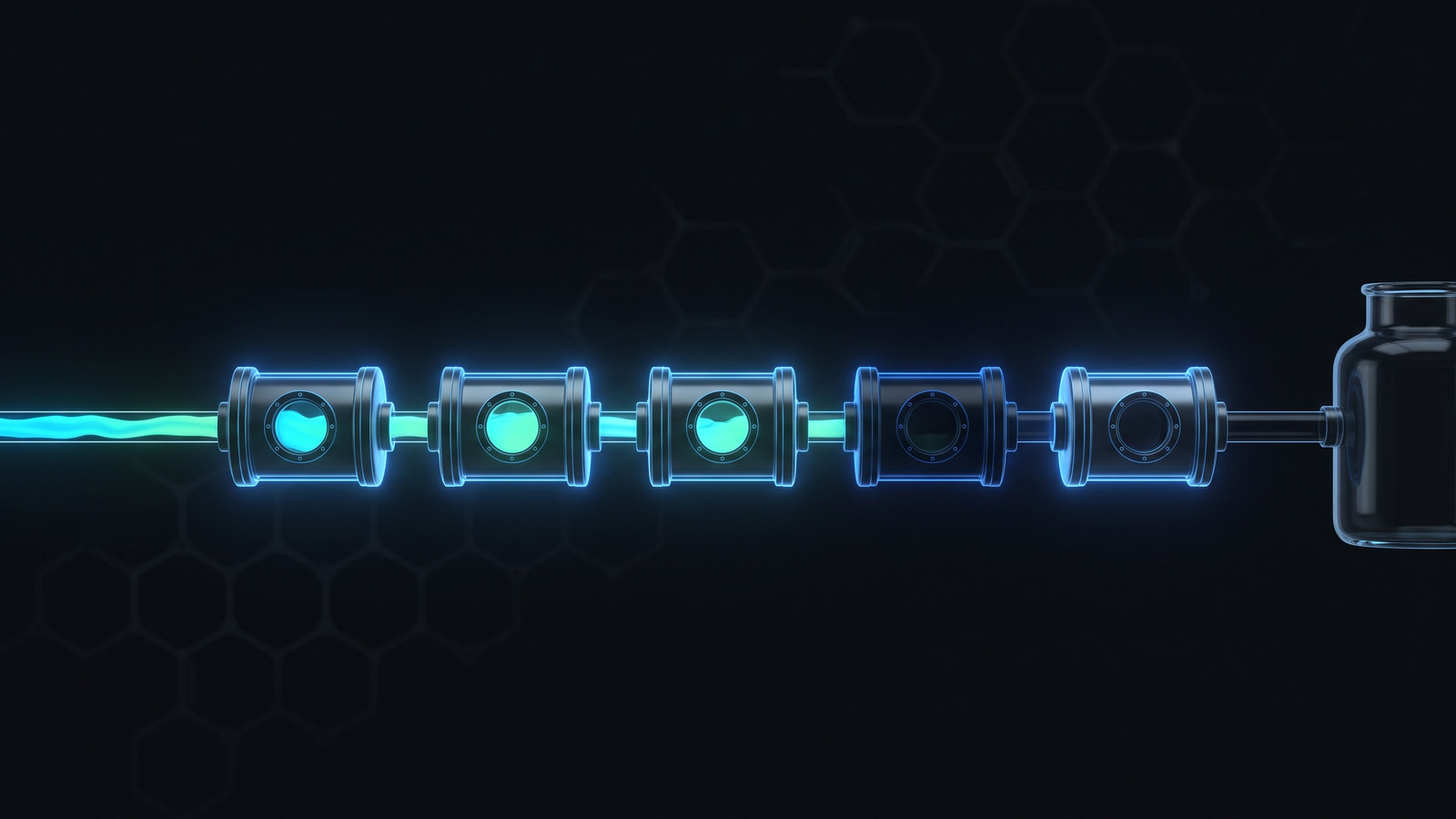
Your Peptide “Did Nothing”? Five Reasons That Aren’t The Molecule
Before you write a compound off, rule out the five execution failures that explain most “it did nothing” reports — including the one that means your vial was already finished before it reached your fridge.
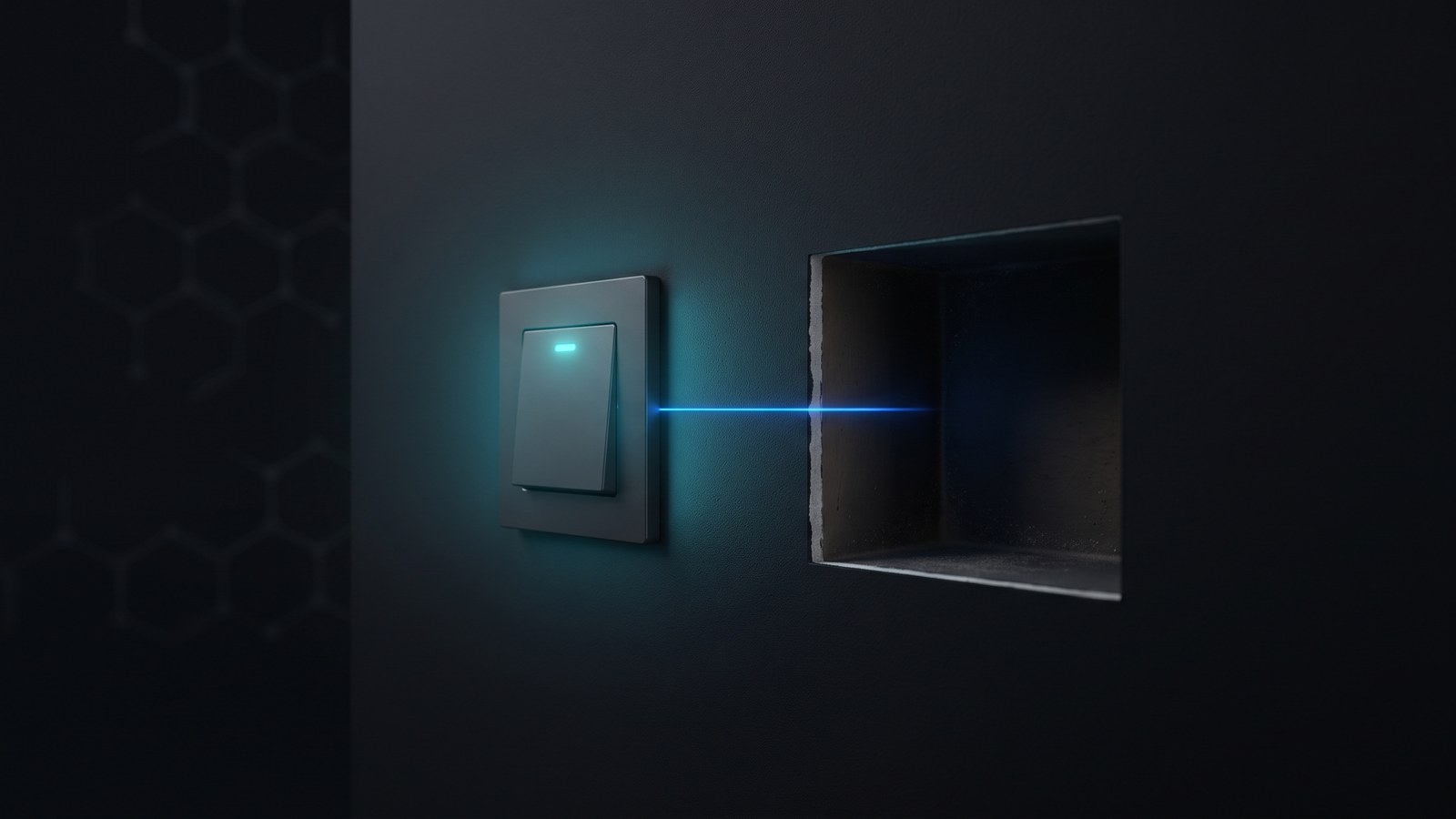
DSIP: The Sleep Peptide the FDA Just Rejected
A peptide named after delta sleep, with no confirmed mechanism and trials that argue with each other. Watch the effect shrink as the study design tightens.
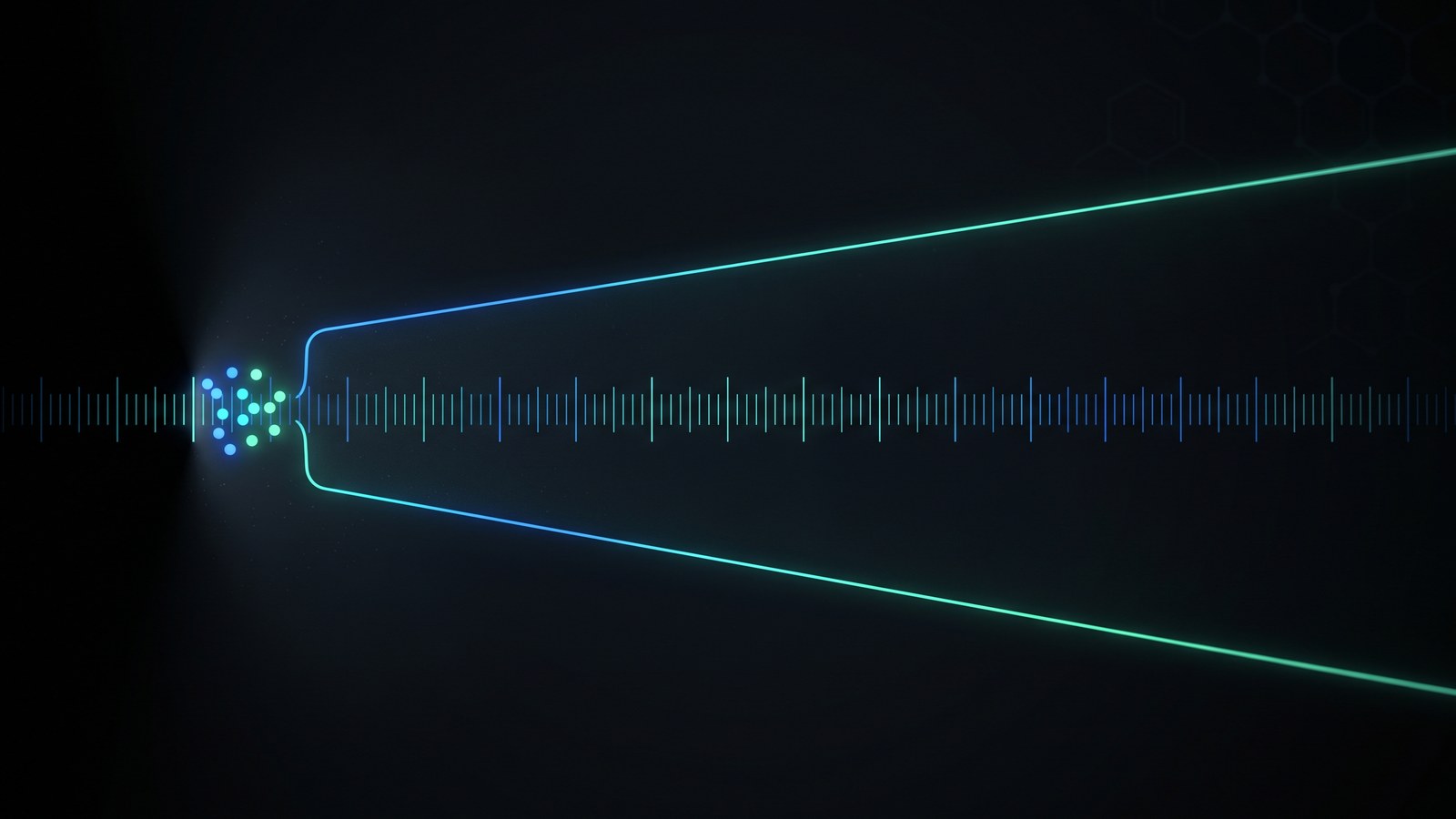
Are Peptides Safe? “Safe” Is a Measurement, Not a Property
Ask whether peptides are safe and you get a shrug, a sales pitch, or a lecture. The reason is that the question is really four questions with four different answers, and only one of them comes back reassuring. Here is what the word costs to earn, and how far short the evidence falls.