Is it real? Is it still intact? Does it do anything? That’s the order the questions actually arrive in, and each book answers one of them. Three free guides to start with, three paid ones when you want the whole method. No vendor names, no doses, anywhere.
Three guides, one email, no cost. Each one is a genuine piece of the paid book it comes from — not a teaser that stops at the interesting bit.
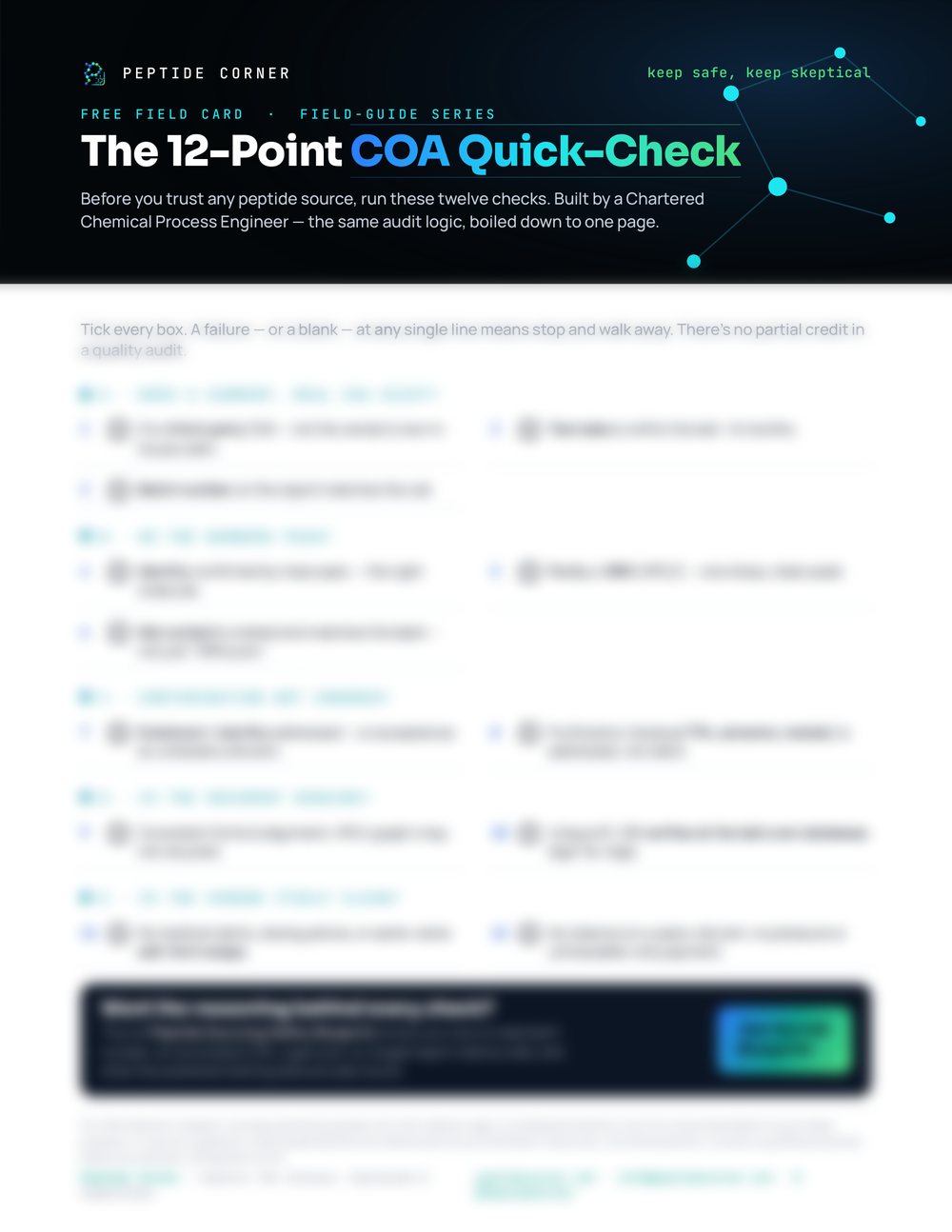
Twelve checks in the order I’d run them. Print it, keep it where lab reports land, work down it. A blank or a fail on any line means stop.
Five things everybody repeats about storing peptides, checked against approved labels and the published literature. Three of the five don’t survive it.
The eight questions to ask of any study before you believe its headline. Once you can ask them, most of the internet gets easier to evaluate.
Three books. Each stands alone; together they cover the whole chain, from the document a seller emails you to whether the molecule was ever shown to do anything.
Is it real? 26 pages on reading a Certificate of Analysis and catching a forged one — an annotated report, a real one beside a fake, and the audit checklist at the back.
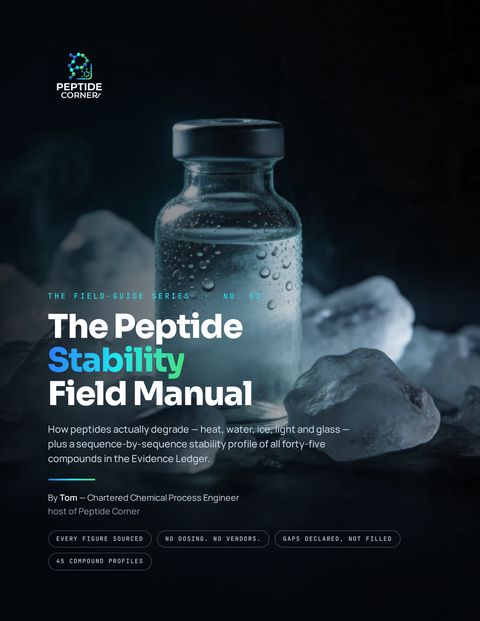
Is it still intact? 122 pages on what actually degrades a peptide, plus a profile of 45 compounds read off their own published sequences. Comes with an offline calculator.
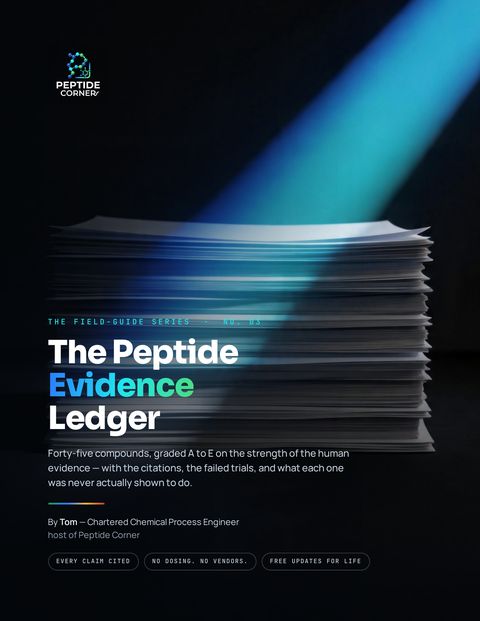
Does it do anything? 45 compounds graded A to E on the human evidence, with 288 citations printed so you can check any grade yourself.
262 pages, two offline tools and three printable cards. Separately that’s $17 + $37 + $49 = $103, so the bundle saves you $24. It’s the only discount on this site, and you can check the arithmetic. All prices in US dollars.
Short version: buy the one that matches the question you’re stuck on. Long version below.
| No. 01 · The Blueprint $17 USD · 26 pages |
No. 02 · The Stability Field Manual $37 USD · 122 pages |
No. 03 · The Evidence Ledger $49 USD · 114 pages | |
|---|---|---|---|
| The question it answers | Is it real? | Is it still intact? | Does it do anything? |
| Buy it if you’re | About to trust a lab report from a seller you don’t know. | Holding something already, and unsure whether it survived the journey. | Deciding whether a compound is worth your time at all. |
| What you’ll be able to do | Read a COA, catch a forgery, and audit the seller behind it. | Work out what a temperature excursion actually cost you, and look up your own compound. | Tell strong evidence from a confident sentence — and check any grade yourself. |
| Covers | Certificates of Analysis and vendor behaviour. | 45 compounds, profiled from their own sequences. | The same 45 compounds, graded A to E. |
| Sources | Cited throughout. | 134 numbered sources. | 288 citations, every one checkable. |
| Comes with | A printable 12-point card. | An offline calculator + a fridge card. | An offline searchable explorer + a grade card. |
| Dosing, vendors, protocols | None, ever. | None, ever. | None, ever. |
Swipe the table sideways to see all three.
The books teach you to read a certificate yourself. This is me reading yours — a signed engineering read of the Certificate of Analysis that came with your order, with the exact questions to put back to whoever sold it to you.
See how it worksThis page used to carry two buttons asking which guide I should build next: reconstitution and shelf-life, or how to read a peptide study. Enough of you picked each that I built both — the first became the Stability Field Manual, the second became the method behind the Evidence Ledger. If you voted, thank you. That’s what the votes were for.
