
Your peptide arrived warm. That’s not the real problem
The box sat on the porch since nine this morning, and the ice pack is now a bag of warm water. Almost every instinct people have about that moment is aimed at the wrong stage of the journey — and at the wrong kind of heat entirely.
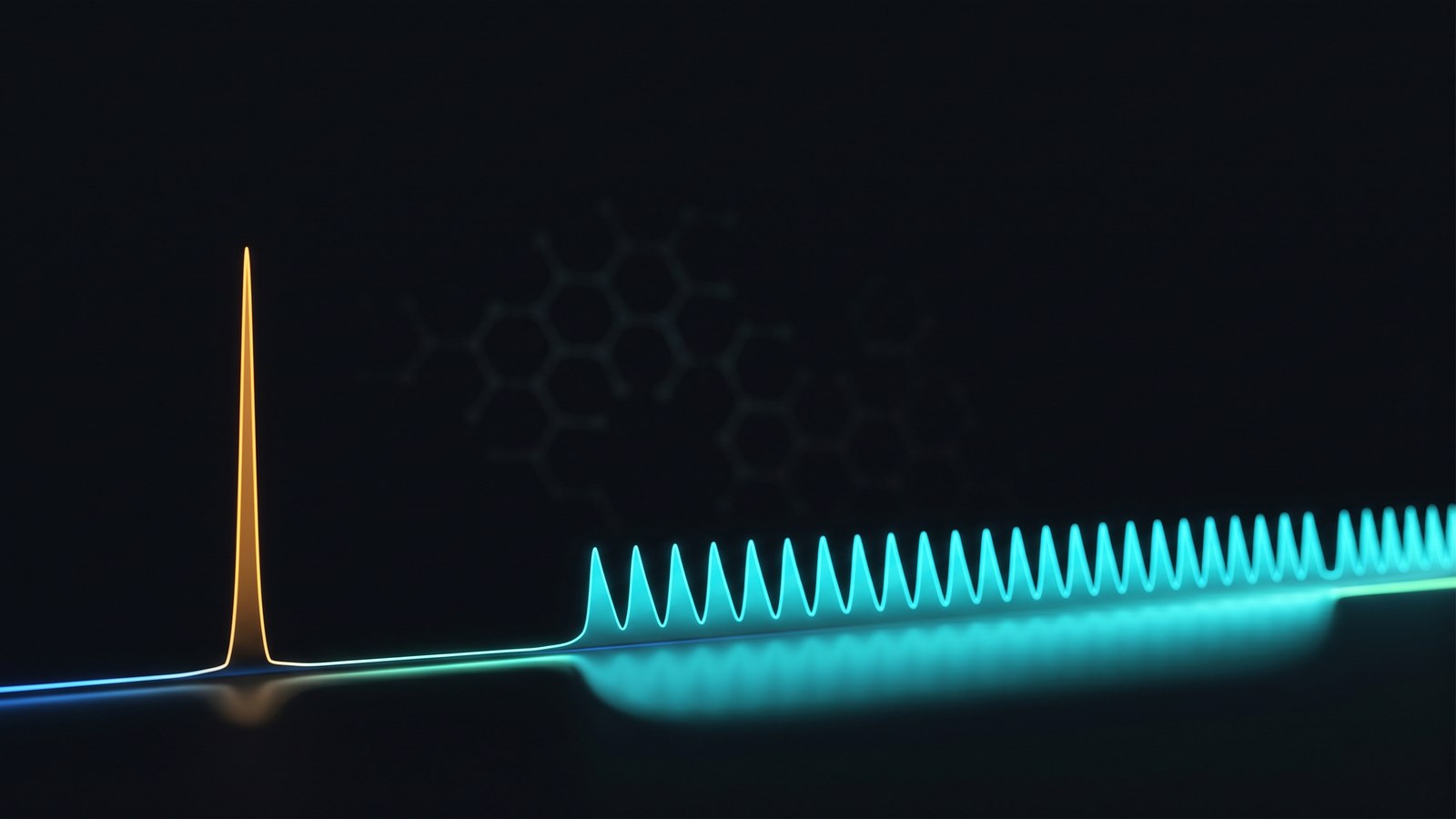
This is the written version of Your Peptide Arrived Warm. That’s Not The Real Problem. — watch it instead if you’d rather.
The box has been on your porch since nine this morning. It is August. You open it, and the ice pack is a bag of warm water.
And your first thought is: well, that is a few hundred quid in the bin.
I am a Chartered Chemical Process Engineer, which mostly means I have spent years being the person who asks “and what temperature was it at, exactly?” at parties. So let me answer the question people actually keep sending me, which is not was it warm — everything gets warm — but how warm, for how long, and did that particular afternoon actually matter.
The honest answer turns out to be close to the opposite of the panic. And it ends up somewhere nobody expects: your kitchen.
Most of the worry is aimed at the wrong stage
There are two completely different products in that box, depending on when you are asking. There is dry, freeze-dried powder, and there is solution. They are not remotely the same problem, and treating them as one is where the panic comes from.
The powder is far tougher than people fear. That is the entire reason it was freeze-dried in the first place. The formulation literature is blunt about this: liquid dosage forms of proteins and peptides often show instability during handling, and solid formulations are frequently required specifically to maintain stability during storage, transport and administration. Surviving the journey is the job the powder was designed for.
The solution sitting in your fridge is the fragile one. It is the stage where the chemistry has water to work with, and water is what most of the degradation routes need.
So the parcel — the bit everyone worries about — is usually the robust stage. And the vial you are relaxed about, because it is safely indoors and cold, is the delicate one.
A melted ice pack is not a verdict
While we are here, let us deal with the ice pack, because it takes more blame than anything else in the box.
An ice pack is not there to arrive frozen. It is there to buy hours. It works by absorbing heat, and it absorbs that heat the entire time it is melting — that is the mechanism, not a failure of it. A pack that arrives as warm water spent itself doing precisely the job it was sent to do.
What it cannot tell you is when it finished doing it. Melted at hour four and melted at hour twenty look identical on your doorstep. Which is the actual limitation, and it is a very different complaint from “the cold pack failed”.
“Mine turned up with no cold pack at all and it was fine”
Somebody always says this, and it is worth taking seriously rather than waving away, because it is completely consistent with everything above.
It was powder. Powder is the robust stage. Of course it was fine.
What that experience is not is evidence about the vial currently sitting in your fridge as a solution. Those are two different molecules’ worth of vulnerability, and a good result on one says nothing about the other.
The question the industry actually asks
Pharmaceutical companies ship this material around the planet constantly, and boxes get warm constantly. They cannot throw a shipment away every time a lorry sits in traffic. So they needed a way to decide whether a consignment is still good — and the answer is a lovely piece of engineering thinking called mean kinetic temperature.
The clever part is that it is not an average.
A simple average would let a pleasant cold night cancel out a brutal hot afternoon, and chemistry does not work like that. Reaction rates climb exponentially with temperature — the degradation work on freeze-dried products puts the activation energies for these reactions mostly in the 8 to 25 kcal/mol range, which is exactly the shape that makes hot hours count far more than cold ones make up for.
So mean kinetic temperature weights the hot hours massively more heavily. It is an average that has been told the truth about chemistry, and it is the accepted method for quantifying what a product experienced during transport and storage.
You are not asking whether it broke the rules. You are asking how much time-at-temperature it accumulated, and against what budget.
They do not test one hot afternoon. They test the repeat.
Here is the part that reframes the whole thing, and it is the reason I stopped worrying about parcels.
When the industry wants to know whether a product survives real-world distribution, it does not simply run it hot once and check. It runs thermal cycling studies — warm, cold, warm, cold, deliberately and repeatedly. One published temperature-excursion management programme describes exactly that: thermal cycling studies run to assess and support potential temperature excursions.
Read what that implies. The people whose job is protecting these molecules in transit are not primarily worried about the one dramatic afternoon. They are worried about the accumulation of ordinary ones.
Damage adds up and it never subtracts
This is cumulative exposure, and every process engineer I have ever worked with thinks in exactly these terms.
You never ask “did it go out of spec once”. You ask how much time-at-temperature this thing has accumulated across its whole life, because the damage adds up and it never subtracts. A cold night does not repair anything. It just fails to make it worse.
Once you are counting a budget rather than judging an event, one warm delivery stops looking like a catastrophe and starts looking like a line item. And you start looking around for where the rest of the budget is going.
The bottom line: the door is a habit
Which brings me to your fridge door.
You open it — what, six or eight times a day? For months? Every one of those is a small warm cycle for whatever is sitting in the door shelf, which is the warmest, most disturbed position in the entire appliance.
Your delivery was one event. The door is a habit. One tall spike against a sawtooth that never stops drawing — and over a few months the habit quietly wins, which is why the back of the fridge is worth more to you than any ice pack ever was.
I will be straight with you about the status of that claim, because this channel does not do sleight of hand: nobody has run that head-to-head experiment on peptides. It is a reasoned inference from how mean kinetic temperature works and from what the industry bothers to test for, not a published result. If you want to push back on it, that is the place to push.
But the direction of the argument is not really in doubt. The boring, repeated thing beats the dramatic one. It usually does.
So stop interrogating the delivery driver, and start interrogating the shelf. And if you want the companion question — whether you can tell any of this by looking at the vial — the short answer is no, and the long answer is worth your five minutes.
Sources
- Kommanaboyina B & Rhodes CT, Drug Development and Industrial Pharmacy, 1999;25(12):1301–6 — https://pubmed.ncbi.nlm.nih.gov/10612028/
- Desai KG, Colandene JD & Adams M, Journal of Pharmaceutical Sciences, 2020;109(7):2131–2144 — https://pubmed.ncbi.nlm.nih.gov/32315663/
- Angkawinitwong U, Sharma G, Khaw PT, Brocchini S & Williams GR, Therapeutic Delivery, 2015;6(1):59–82 — https://pubmed.ncbi.nlm.nih.gov/25565441/
- Shalaev E, Ohtake S, Moussa EM, Searles J, Nail S & Roberts CJ, Journal of Pharmaceutical Sciences, 2023;112(6):1509–1522 — https://pubmed.ncbi.nlm.nih.gov/36796635/
Educational and research purposes only — not medical advice. Peptide Corner does not recommend any vendor, source, or dose. Keep safe, keep skeptical.


Your Peptide Looks Fine. That Proves Absolutely Nothing.
Cloudy, floaters, colour, smell — the four checks everyone runs. What visual inspection can and cannot detect, according to the people who do it professionally.
Peptide Storage: The 30-Day Rule Measures the Wrong Thing
It is 28, not 30, and it is a sterility rule for a punctured vial — not a statement about your molecule. Where the number really comes from.

Your Peptide “Did Nothing”? Five Reasons That Aren’t The Molecule
Before you write a compound off, rule out the five execution failures that explain most “it did nothing” reports — including the one that means your vial was already finished before it reached your fridge.