
Four in ten samples failed. The molecule was never the problem.
One camp says these vials are miracle cures and the other says they are snake oil. Both are arguing about the molecule, and the molecule was never the part most likely to let you down.
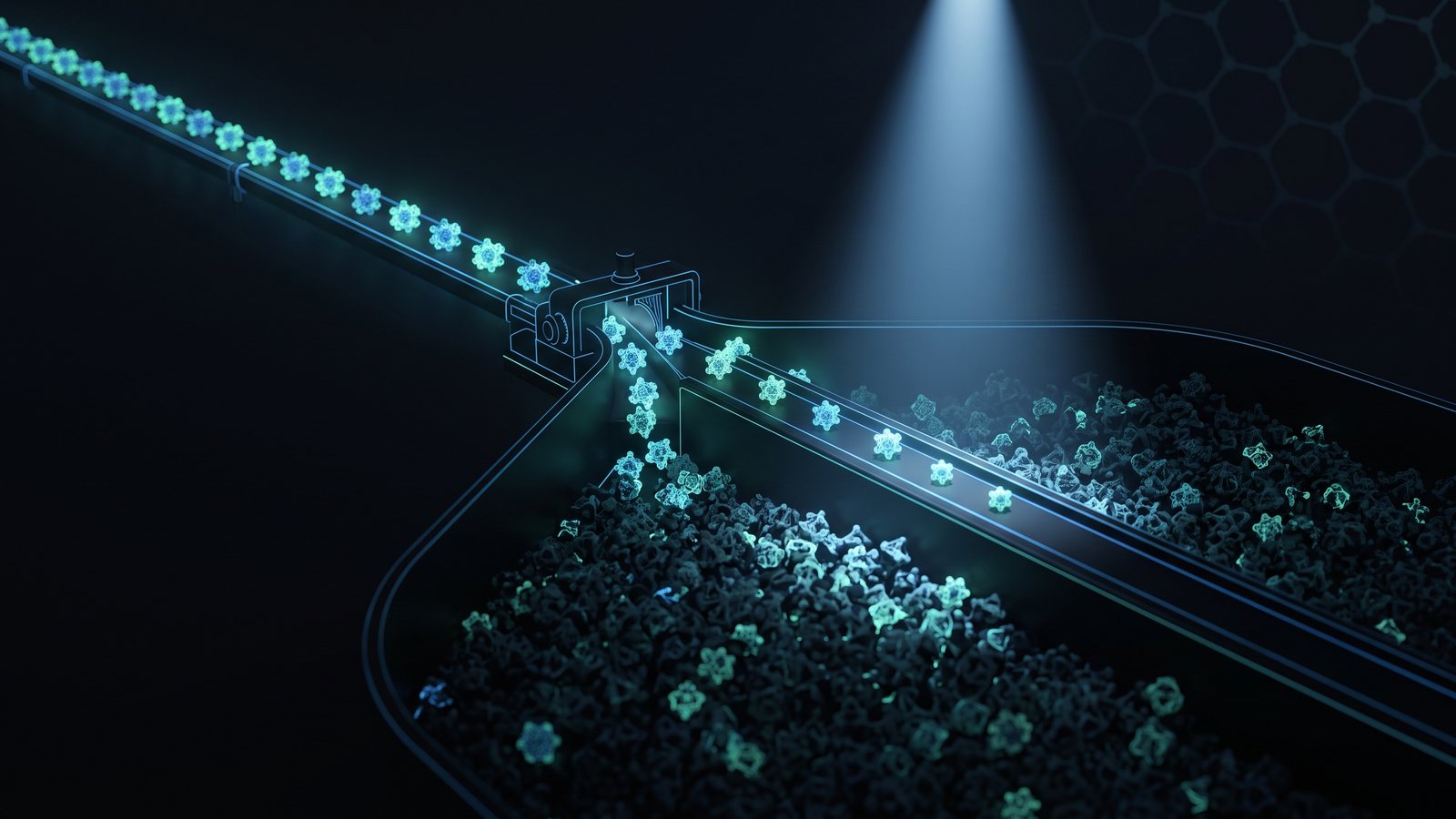
This is the written version of The Peptide Quality Crisis: What You Need to Know — watch it instead if you’d rather.
Everybody in the peptide world is arguing about the wrong thing. One camp swears these little vials are miracle cures. The other camp says it is all snake oil. Both are having an argument about the molecule, and I spend my working life being professionally suspicious of what is actually inside a container versus what the label promises. From where I sit, the molecule was never the part most likely to let you down.
The evidence, tier by tier
Start at the top, because the top is genuinely good. The GLP-1s — semaglutide, tirzepatide — have been through proper human trials with tens of thousands of participants and carry regulatory approval. Nearly a hundred peptide drugs have now been approved. That is a mountain of data, and anyone telling you peptides as a class do not work has not looked at it.
The awkward part is that the mountain of data is not what most of the internet is buying. Slide down into the biohacking end and the evidence thins out fast.
Thirty-five rats and one person
BPC-157 is the clearest case. A 2025 systematic review in the HSS Journal went looking for everything published on it in orthopaedic sports medicine, identified 544 articles, and after screening was left with 36 that met inclusion. Of those 36, thirty-five were preclinical and exactly one was a clinical study. So when somebody tells you BPC-157 is clinically proven, it is worth asking which clinic they mean, because statistically it was a rodent.
It is not just BPC-157. MOTS-c has a single small human safety study behind it, twenty people over four weeks, and I have gone through what that does and does not establish in the piece on MOTS-c and SS-31. The so-called Wolverine stack, BPC-157 and TB-500 run together, has never been tested in humans at all. It is a combination the internet invented.
None of that makes any of these compounds fake. It makes them early. There is a real difference between this does not work and nobody has properly checked, and the second one is where most of this sits.
The argument that can never be lost
Before the testing data, one habit of thinking worth naming. When a peptide works, people credit the peptide. When it does not, the answer is that you must have got a bad batch. Notice what that does: arranged that way, the peptide can never lose. Every good outcome is evidence for it and every bad one is evidence for something else.
That is not evidence. It is a loop. Real proof needs controls, placebos, and the one thing the grey market structurally cannot supply, which is confidence about what was actually in the syringe. Which brings me to the part of this I find genuinely difficult to write about calmly.
What the testing actually found
An independent analysis published in 2026 pulled together certificates and test reports for peptides sold directly to consumers. It covered 6,285 samples with complete data, across fourteen compounds, from 203 separate synthesis companies. Judged against the more lenient of the two standards the authors applied, 41.6% failed to meet basic purity, abundance or identity criteria. Against the stricter standard, the one closer to what a manufactured drug product has to meet, 71.1% failed.
Four in ten. Not contaminated in the dramatic sense, necessarily — the failures include not enough active peptide, too much of it, and material that is not cleanly what the label says. But four in ten is not a rounding error on a production line. It is a process that is not in control.
I should be straight about the status of that analysis: it is a preprint and it has not been peer reviewed. I am reporting its numbers as its authors state them, not as settled fact, and if it changes on review I will say so. But the sample size is large, it spans two hundred companies rather than a handful, and it is the most systematic look at this question anyone has published.
The part that is harder to shrug off
Endotoxin results were available for 243 of those samples, and 15% carried measurable contamination, in the range of 0.5 to 40 endotoxin units per millilitre. Endotoxins are fragments of dead bacteria. Your immune system treats them as a five-alarm fire, which is where fever and chills come from. They are also not something a person can see, smell or test for at a kitchen table.
As a process engineer, that is not a peptide problem. It is a quality control problem, and it is a different category of thing entirely. A beautiful mechanism on paper does you no good whatsoever if the liquid in your hand is under-strength, over-strength, or growing something.
So what is left to do
Here is the uncomfortable freedom of an unregulated market: whether you wanted the job or not, you have become your own quality manager. I am not going to tell you what to buy or where to buy it, and I take no money from anybody who sells peptides, so I have no reason to steer you anywhere.
What I will say is that there is one non-negotiable, and it is a document rather than a brand. An independent, third-party certificate of analysis, for that specific batch, from a laboratory that does not profit from the sale. Not the seller's word for it. Not a screenshot from a forum. No certificate means you do not know what is in it, and everything else in this article is downstream of that. If you want the version of this that goes further upstream, I have written about which of four systems a vial actually came out of, and about why you have ended up as the QA department.
The bottom line
Do peptides work? Some genuinely do, with real human trials behind them. For a lot of the rest, honestly, nobody knows yet, because the evidence is a handful of people and a great many optimistic rats.
But the bigger issue is not the molecule at all. It is that four in ten samples were not what they claimed to be. Real science does not help you if the product in your hand is not the product.
Had a certificate sent to you? I read them — peptidecorner.net/coa-read
Sources
- Mendias & Awan, 2026 — the analysis this article is built on: 6,285 samples with complete data across fourteen compounds, drawn from 203 separate peptide synthesis companies. On the more lenient of the two standards applied, 41.6% failed to meet basic purity, abundance or identity criteria; on the stricter one, 71.1% did. Endotoxin results were available for 243 of them, and 15% carried measurable contamination at 0.5 to 40 EU/mL. ⚠ This is a PREPRINT and has not been peer reviewed, which is why every figure above is reported as its authors state it rather than as settled fact — https://doi.org/10.20944/preprints202604.1748.v1
- Vasireddi, Hahamyan, Salata et al., HSS Journal, 2025 — a systematic review of BPC-157 in orthopaedic sports medicine. 544 articles were identified and 36 met inclusion: 35 preclinical, and one clinical study — https://pmc.ncbi.nlm.nih.gov/articles/PMC12313605/
- Advance in peptide-based drug development — delivery platforms, therapeutics and vaccines, 2025. The scale of the approved field, and the distance between a peptide that cleared regulatory review and one that did not — https://pmc.ncbi.nlm.nih.gov/articles/PMC11880366/
- 2025 FDA TIDES harvest — the year’s approved peptide and oligonucleotide drugs, counted and categorised — https://doi.org/10.3390/ph19020244
Educational and research purposes only — not medical advice. Peptide Corner does not recommend any vendor, source, or dose. Keep safe, keep skeptical.


Your Peptide Came From One of Four Places. Ask Which.
Four systems can produce or handle a peptide. Each leaves a different paper trail, and one is built to leave nothing to check.
Why the Peptide Gray Market Makes You the QA Department
“Research use only” is not a quality standard — it is the mechanism that moves the entire quality function from an inspected factory onto the buyer.
BPC-157: What the Evidence Actually Says About the “Wolverine Peptide”
BPC-157 has spectacular animal data and almost no human data — here is the mechanism, the evidence, and the honest verdict as of late July 2026.