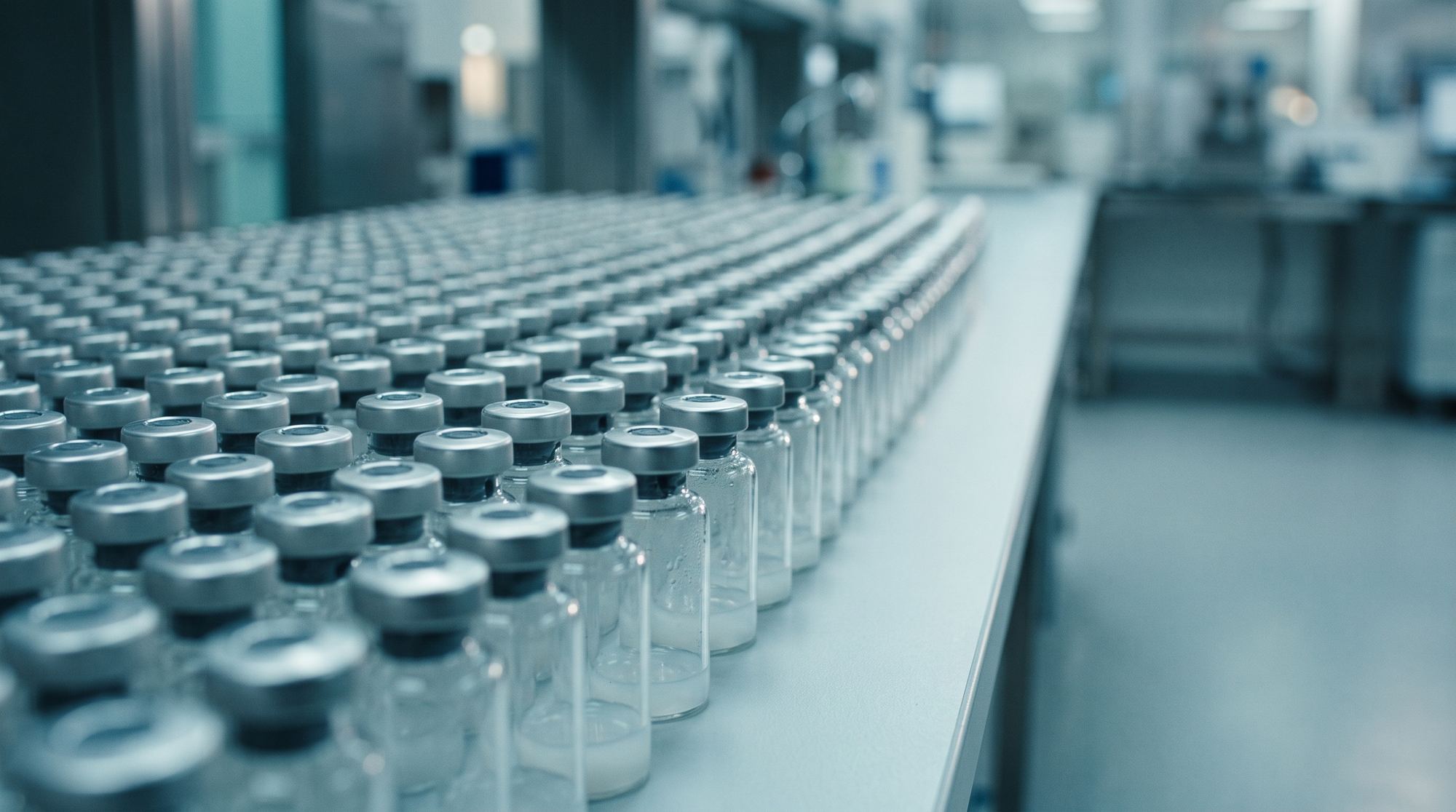
Know if your peptides are real before you use them.

Anyone can email you a lab report that looks legitimate. Almost nobody can tell a real one from a forgery — and the people selling to you know that. Three free guides give you the checks that settle it, plus what actually degrades a peptide and how to tell whether a study means anything.

One page. No cost. Printable.

Most vials are fine. The problem is the ones that aren’t.

Someone finally tested this market properly — 6,441 samples, 14 compounds, 203 different sellers. The typical vial came back 99.8% pure, which is genuinely reassuring. Then you look at the tail end.

1 IN 10

Nothing in the vial

For some compounds, the peptide on the label simply wasn’t there. Not underdosed — absent.

15%

Carried endotoxin

The stuff that gives you a fever. A purity test is completely blind to it, so a clean report proves nothing here.

7.7%

Sold as “99% pure”

What GLP-1 vials from unauthorised sellers actually measured. A number on a store page is marketing, not measurement.

You can’t see any of this by looking at the vial. You catch it on the paperwork — which is exactly where most people give up. Sources: Mendias & Awan (2026), preprint; Ashraf, Mackey et al. (2024), J Med Internet Res.

Free download

Three free guides. One email.

Is it real, is it still intact, does it do anything. There’s a guide for each question — and none of them stop at the interesting bit. No vendor names, no doses, no cost.

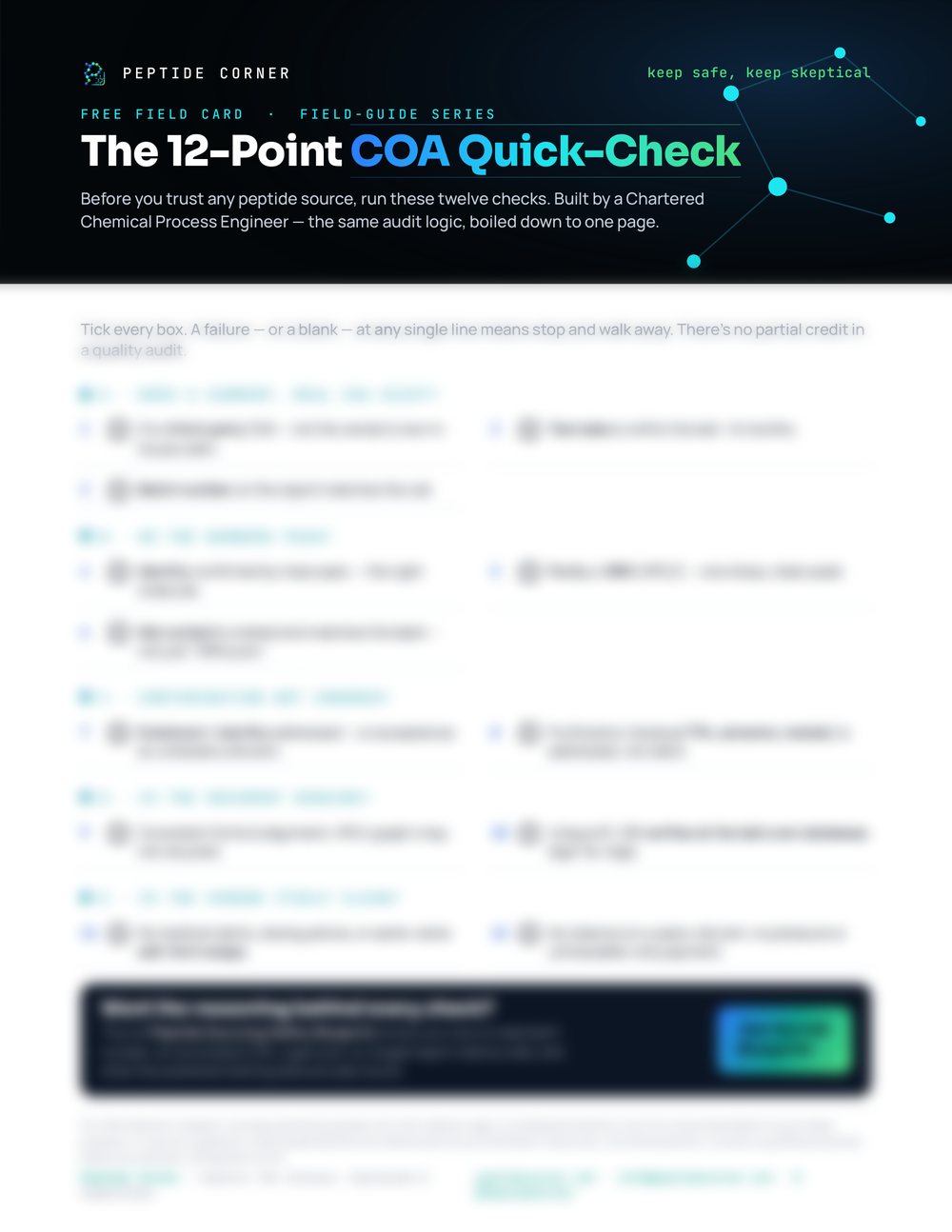
  • The 12-Point COA Quick-Check — twelve checks in the order I’d run them, on one printable page
  • The Peptide Storage Reality Check — five things everybody repeats about storage; three don’t survive the check
  • How to Read a Peptide Study Like an Engineer — the eight questions to ask before you believe a headline

Your email, all three guides, done. You'll also get a short note when a new video or guide lands — unsubscribe whenever, no hard feelings.

Three questions about any peptide.

Is it real? Is it still intact? Does it do anything? They arrive in that order, and there’s a guide for each — free versions to start with, full books when you want the whole method.

01 · Is it real?

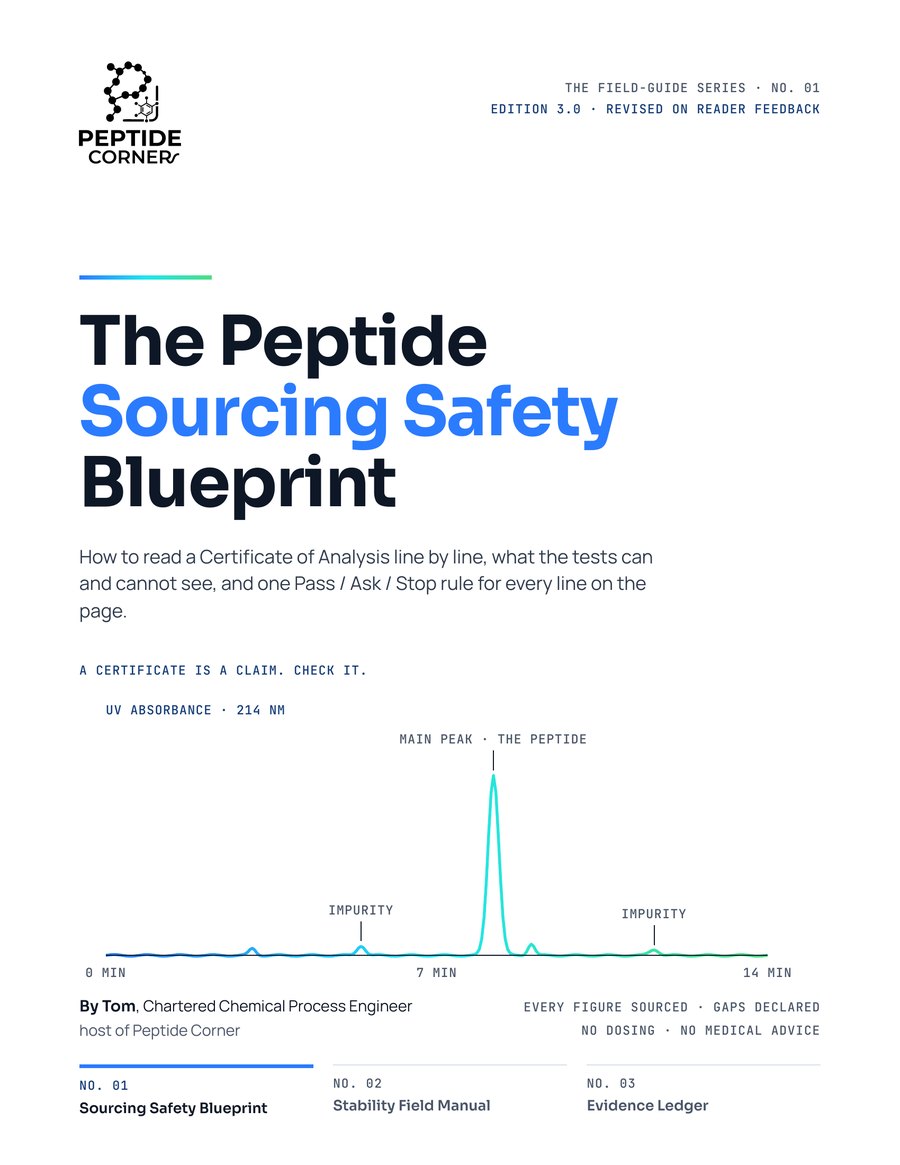
The Sourcing Safety Blueprint

$17 USD · 26 pages

Read a Certificate of Analysis, catch a forged one, and audit the seller before you ever open the lab data.

See what’s inside →

02 · Is it still intact?

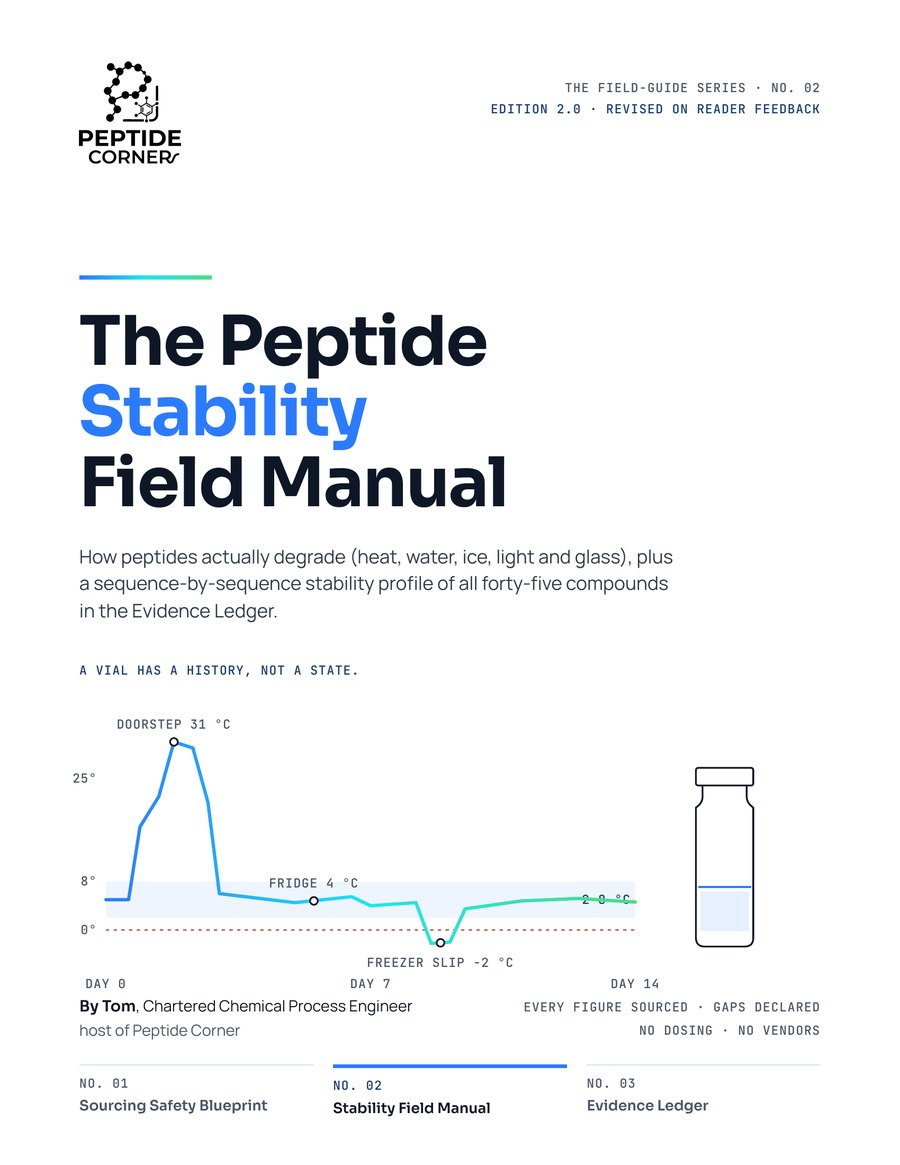
The Stability Field Manual

$37 USD · 122 pages

What heat, water, ice and light actually do — plus 45 compounds profiled from their own published sequences.

See what’s inside →

03 · Does it do anything?

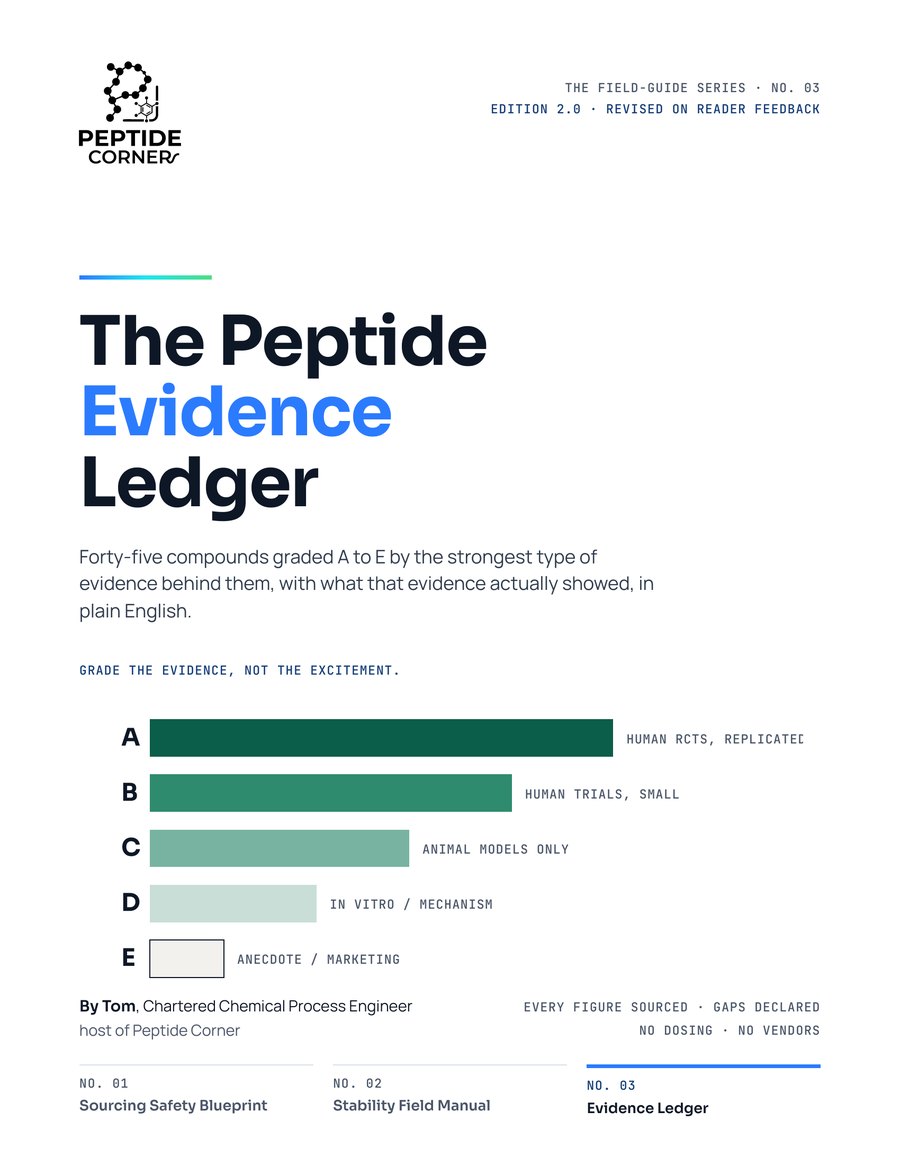
The Evidence Ledger

$49 USD · 114 pages

45 compounds graded A to E on the human evidence, with 288 citations printed so you can check any grade.

See what’s inside →

All three together — $79 USD instead of $103

262 pages, two offline tools, three printable cards. Or start with the three free guides and see how I think first.

Start with the free guides.

Then decide whether you want the rest. That’s the whole pitch.

Get the free guides Subscribe on YouTube
New

Or have me read your certificate for you.

Whoever sold you your peptide sent you a Certificate of Analysis. Send it to me and get back a signed engineering read of it — what it establishes, what it does not, and the questions to ask next. From $149 USD.

The COA Read →

The science, minus the sales pitch.

Two a week, Sundays and Wednesdays. What the peptide does, what the evidence actually supports, and where it falls over.

All videos →
Most popular

Your Peptide Started Dying The Day It Was Mixed

Watch on YouTube ↗
Is it real?

Is Your Peptide Lab Report Fake? The COA Gives It Away

Watch on YouTube ↗
News

The FDA Panel Just Overruled Its Own Scientists

Watch on YouTube ↗
Tom
I'm Tom. I'm a chartered process engineer — auditing suppliers and picking holes in lab data is what I do for a living. This site is that same job, pointed at peptides. More about me →