
DSIP: the sleep peptide the FDA just rejected
Nine amino acids named after the exact thing they are sold to do — and fifty years later nobody has found the receptor, the gene or the site of synthesis. When an FDA advisory committee reviewed seven peptides in July 2026, this was the only one it turned down. Here is what is actually in the file.
In this article ▾
This is the written version of DSIP: The Sleep Peptide The FDA Just Rejected — watch it instead if you’d rather.
In process engineering the first thing you learn to distrust is a label. A vessel marked “clean” is not clean, and a valve marked “fail-safe” only fails safe in the one direction somebody thought about in 1978. The label is a claim made once, by someone who has since left. The equipment and the claim drift apart the moment nobody checks.
Which brings us to Delta Sleep-Inducing Peptide. Nine amino acids, pulled out of a laboratory in the 1970s, sold today as the cleanest sleep aid on the planet: natural, non-habit-forming, something your own body already makes. And a name that tells you exactly what it does, printed right on the tin.
That name has been doing an enormous amount of heavy lifting for fifty years. In July 2026 an FDA advisory committee sat down with the evidence behind it, alongside the evidence behind six other peptides — and DSIP was the only one of the seven the committee turned down.
Nine amino acids you have already met
Start with the chemistry, because it is the least controversial part. DSIP is a nonapeptide — nine amino acids in a row, a molecular weight around 850 daltons. That makes it tiny. Most of the compounds covered on this channel are several times heavier.
It is also not an invention. DSIP-like material has been reported in the brain, in blood, and — this is the detail that stops people mid-sentence — in human breast milk. Whatever the marketing implies about a rare and exotic molecule, the honest position is that you have very probably been swimming in the stuff since your first week alive.
So far, so promising. The trouble starts when you ask the only question that matters for a molecule with that name: how does it make you sleep?
The light switch with nothing behind the wall
Here is where fifty years of research produces a genuinely uncomfortable answer. Nobody knows.
Not “the mechanism is debated”. Not “two competing models exist”. In half a century of work, no receptor for DSIP has been confirmed. Where in the body it is synthesised is not established. In the rabbit — the animal it was originally isolated from — the gene encoding it has never been identified. A major review of the field summed the whole thing up as “a still unresolved riddle”, which is not the sort of phrase scientists reach for lightly.
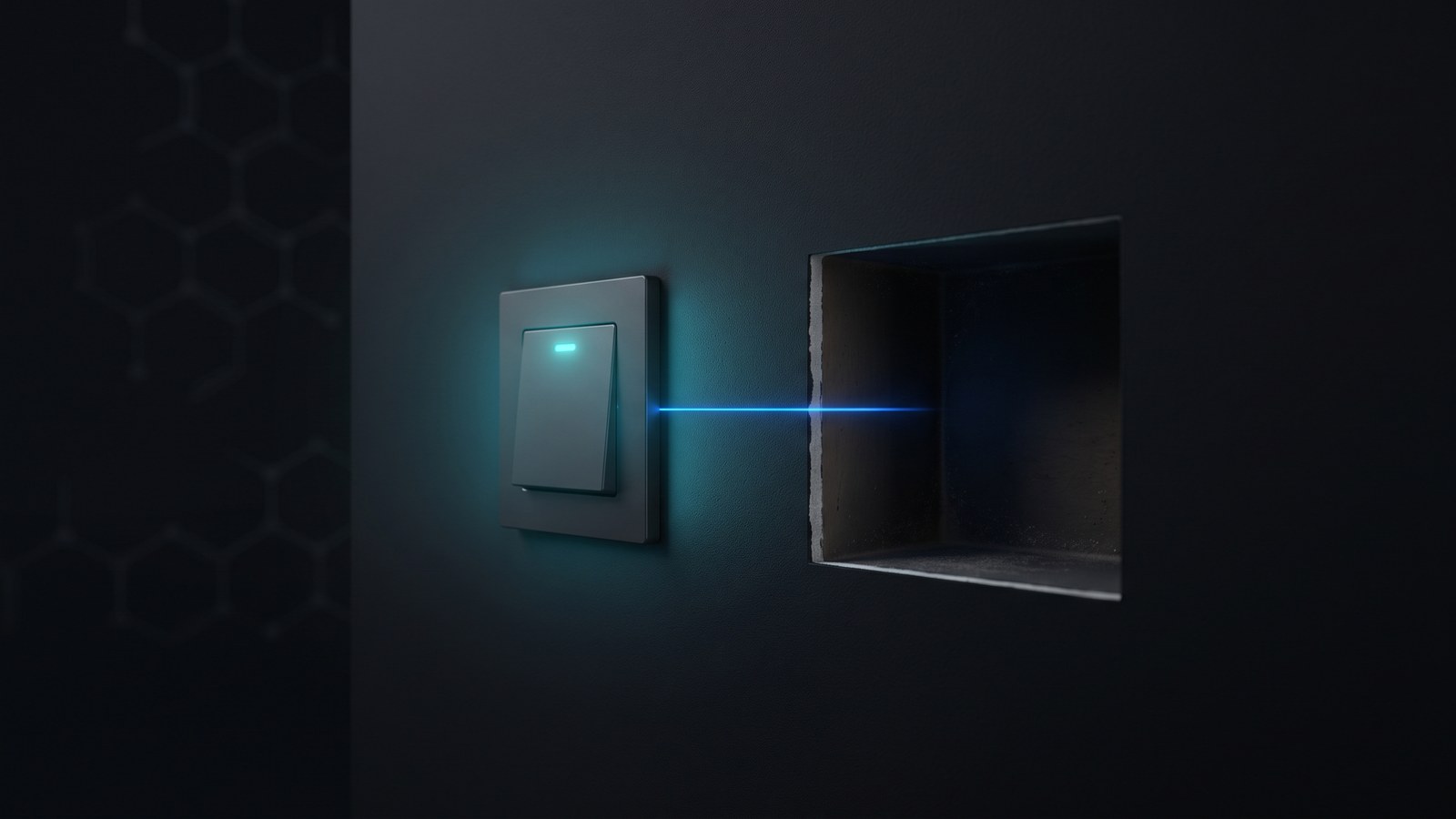
The picture I keep coming back to is a light switch. You find one on the wall. You flip it, and sometimes the lights come on. Encouraged, you open up the wall to trace the circuit — and the cavity behind the plate is empty. Bare plaster and dust. You would not conclude the switch is broken; you would conclude that any confident story about how it works is being told by someone who has not opened the wall. Fifty years in, the wiring diagram for DSIP is still blank.
The eight questions to ask of any study before you believe its headline. Comes with the other three free guides, for one email.
Get the free guidesWatch the effect shrink as the science tightens
An unknown mechanism is survivable if the results are solid — plenty of useful drugs arrived before anyone could explain them. So the fair question is whether DSIP actually works in people, regardless of why.
The early answer looked excellent. Small studies in the 1980s injected DSIP into chronic insomniacs and reported real improvement — one open trial of seven patients described sleep as having “normalized”, and holding for months afterwards. Another small study of synthetic DSIP in six chronic insomniacs reported longer, better sleep without daytime grogginess.
Now look at the word I bolded. Open means no placebo and no blinding: the patients knew they were being given the promising new sleep compound, and so did the researchers writing down how well they slept. That is not fraud and it is not useless — it is how you generate a hypothesis. It is simply not how you test one, because expectation is one of the most powerful sleep interventions ever measured.
Then somebody ran the proper version. A double-blind, placebo-controlled crossover study, with sleep measured by polysomnography rather than by asking. Neither the patients nor the investigators knew who had what. And the result was that sleep nudged upward a little — but the authors’ own conclusion was that the improvement was “of little clinical significance”. They also noted that some of the differences that looked significant were already there at baseline, before anything was given at all.
That is the whole argument in one movement. The tighter the study design got, the more the effect evaporated. It is a pattern worth learning to spot, because it recurs everywhere in this field: the benefit is largest exactly where the evidence is weakest. When the claim shrinks under blinding, the claim was mostly expectation.
An effect that survives only in studies where everyone knew what they were getting is not an effect. It is a mood.
Why the committee said no — and said it only to this one
All of which found its way into a government meeting room. In July 2026 the FDA’s Pharmacy Compounding Advisory Committee reviewed seven peptides to decide whether each should go onto the 503A bulks list — the roster of ingredients a compounding pharmacy is permitted to prepare against a prescription. DSIP appeared under its formal name, Emideltide.
The setup matters, because it makes the outcome mean something. The FDA’s own scientific reviewers had recommended against all seven. The committee then went ahead and recommended six of them anyway, overruling the agency’s staff. I wrote up that extraordinary two days separately, and it is worth reading, because it explains why a room full of clinicians was willing to disagree with its own scientists.
DSIP was the one they would not carry. It went down six votes to seven. One pharmacist on that panel voted yes on every other peptide across two days and voted no on this one. When the reliable yes flips, you are not looking at a committee in a mood — you are looking at data that is genuinely thinner than the rest of a thin field. The studies were characterised as preliminary and insufficient, and there was a second flag: a theoretical concern about the reward pathway, the same wiring involved in dependence — a worry that was, oddly, baked in from the start, since that seven-patient trial’s own authors had noted a complication with drug-addiction history in their group.
Be precise about what this vote does and does not mean, though. An advisory committee recommendation is not a rule, and none of this makes anything legal or illegal on its own — a proposed rule and a public comment period sit between a vote and anything binding. What it does tell you is how DSIP’s evidence looks to people who read it for a living, next to six comparable compounds. It looked worse.
The rabbit that started all of it
One last thing, because the origin story is the best part and it also explains why the mechanism gap is so stubborn.
In the 1970s a Swiss group led by Monnier and Schoenenberger ran an experiment that would raise eyebrows today. They nudged rabbits into a sleep state, then passed blood from those sleeping animals into other rabbits — and the recipients went into deep, slow-wave delta sleep too. Something in the blood was carrying the signal. They chased that something, isolated it in 1974, and named it after what it appeared to do.
So the molecule was named for an observed effect in a transfer experiment, before anyone knew what it bound to or where it came from. That is a perfectly reasonable way to name a discovery. It is a terrible way to define a product — and fifty years on, the definition has never been filled in.
The bottom line
DSIP is not a scam and it is not a miracle. It is a real, small, naturally occurring molecule with a spectacular name, a handful of small and contradictory human trials, no confirmed mechanism, and a regulatory panel that read the whole file and said not yet — the only one of seven to get that answer. It is a useful case study because it separates two things people constantly conflate: “your body makes it” is a statement about origin, “it works” is a statement about evidence, and DSIP has an unusually good claim to the first and an unusually poor one to the second.
And since there is no approved product, there is no standardised material either — which means anything sold under that name comes with the usual unanswered question about what is actually in the vial, and the usual answer about who is checking. If you want the same critical read applied to another of the seven peptides from that meeting, the KPV write-up is the closest sibling to this one.
The name promises delta sleep. The evidence, so far, cannot reliably deliver it. Keep your expectations where the data is — which is to say modest. Keep safe, keep skeptical.
Sources
- Monti et al., “Sleep laboratory study of the effects of delta sleep-inducing peptide in chronic insomniacs” (double-blind, placebo-controlled crossover; “of little clinical significance”), Int J Clin Pharmacol Res, 1987 — https://pubmed.ncbi.nlm.nih.gov/3583493/
- Kaeser, “A clinical trial with DSIP” (open, uncontrolled, seven patients; sleep reported “normalized”, with a noted drug-addiction complication in the group), Eur Neurol, 1984 — https://doi.org/10.1159/000115717
- Schneider-Helmert & Schoenenberger, “Effects of DSIP in man” (synthetic DSIP in six chronic insomniacs), Experientia, 1981 — https://doi.org/10.1007/BF01971753
- Schneider-Helmert, “DSIP in insomnia” (summary of the injection studies), Eur Neurol, 1984 — https://doi.org/10.1159/000115714
- Kovalzon & Strekalova, “Delta sleep-inducing peptide (DSIP): a still unresolved riddle” (no confirmed receptor, site of synthesis unknown), J Neurochem, 2006 — https://doi.org/10.1111/j.1471-4159.2006.03693.x
- FDA, July 23-24, 2026 Meeting of the Pharmacy Compounding Advisory Committee — meeting page, briefing materials and transcripts (primary source for the Emideltide vote) — https://www.fda.gov/advisory-committees/advisory-committee-calendar/july-23-24-2026-meeting-pharmacy-compounding-advisory-committee-07232026
- Drug Topics, FDA panel to evaluate seven popular peptides for the compounding substances list, 2026 — https://www.drugtopics.com/view/fda-panel-to-evaluate-7-popular-peptides-for-compounding-substances-list
Educational and research purposes only — not medical advice. Peptide Corner does not recommend any vendor, source, or dose. Keep safe, keep skeptical.


FDA vs FDA: Why the Advisory Panel Overruled the Agency’s Own Scientists
The committee overruled the FDA’s scientific reviewers on six of seven peptides — and rejected the seventh. Inside the arguments, the one rejection that proves it wasn’t a rubber stamp, and why a vote is not a rule.
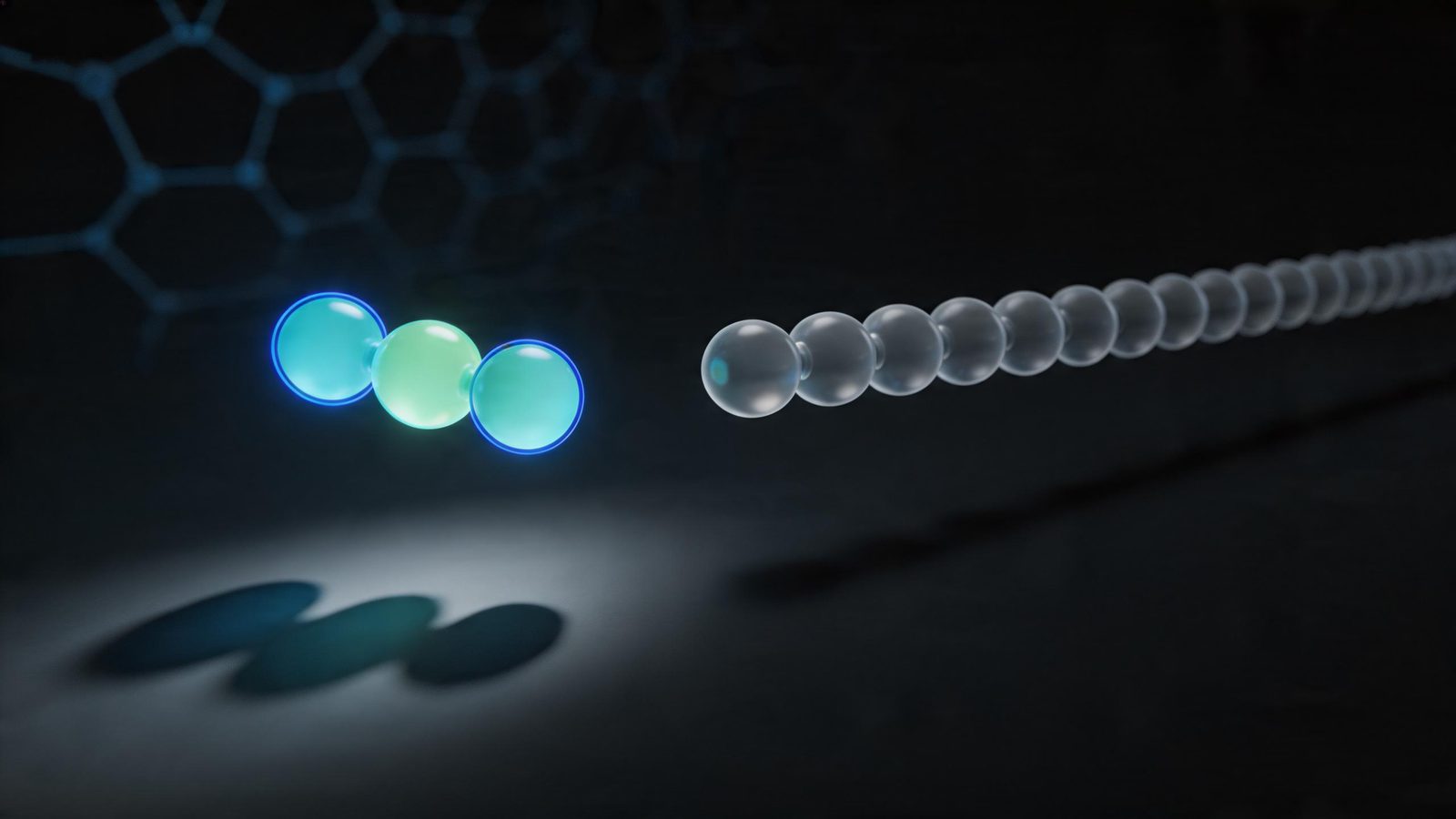
KPV: The Anti-Inflammatory Peptide Whose Evidence Is Still Wearing Fur
A three-amino-acid scrap of the tanning hormone that quiets inflammation at tiny concentrations, rides a transporter that opens wider exactly where the damage is, and moonlights as an antibiotic. Now the part the hype skips.
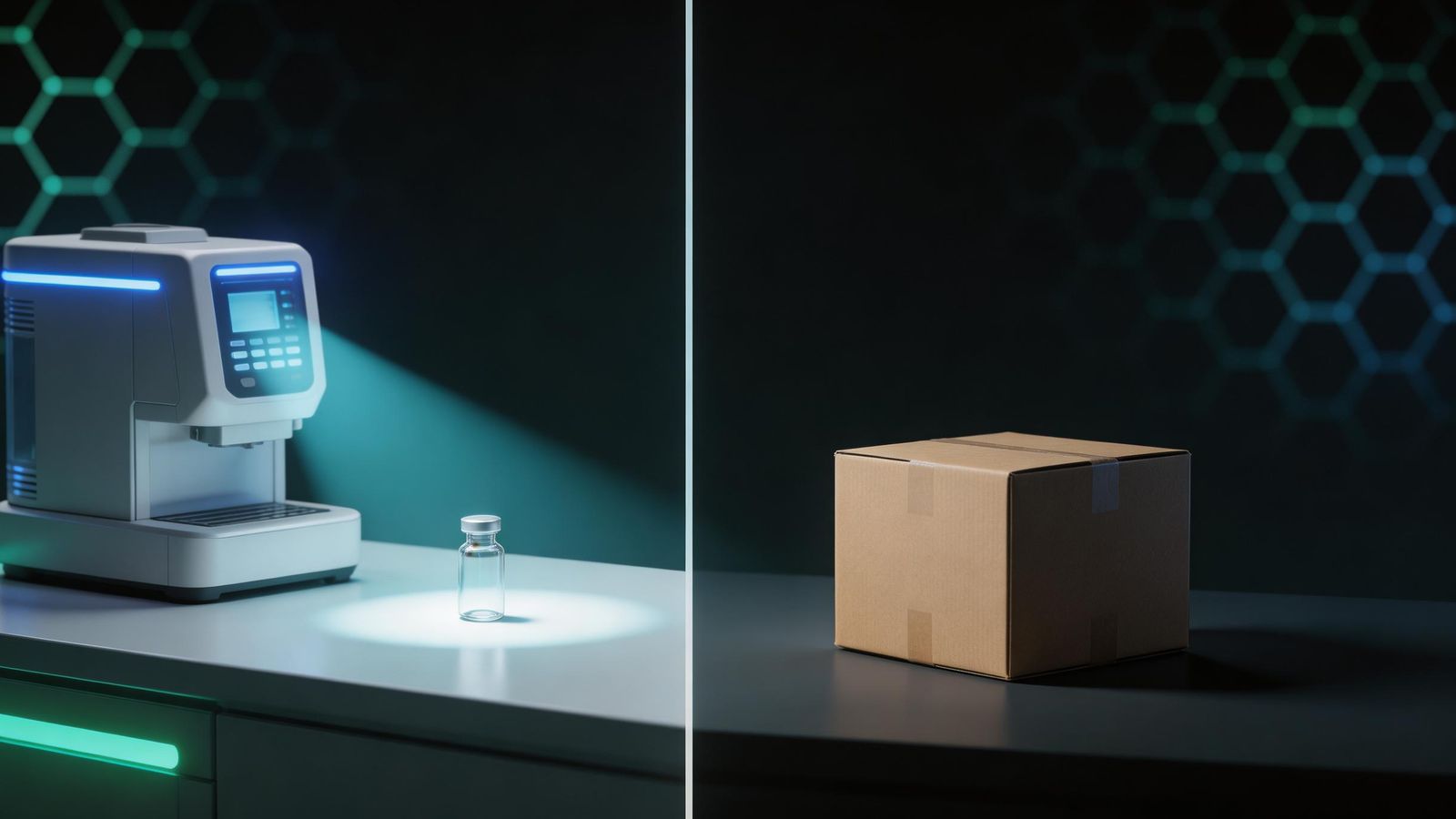
Why the Peptide Gray Market Makes You the QA Department
“Research use only” is not a quality standard — it is the mechanism that moves the entire quality function from an inspected factory onto the buyer.