
KPV: the anti-inflammatory peptide whose evidence is still wearing fur
KPV is three amino acids long — the snipped-off tail of the hormone that runs your suntan. Somebody cut a big molecule in half and the anti-inflammatory muscle turned out to live in the offcut. The mechanism is genuinely elegant, the delivery route is cleverer still, and almost every result behind it was measured in a mouse.
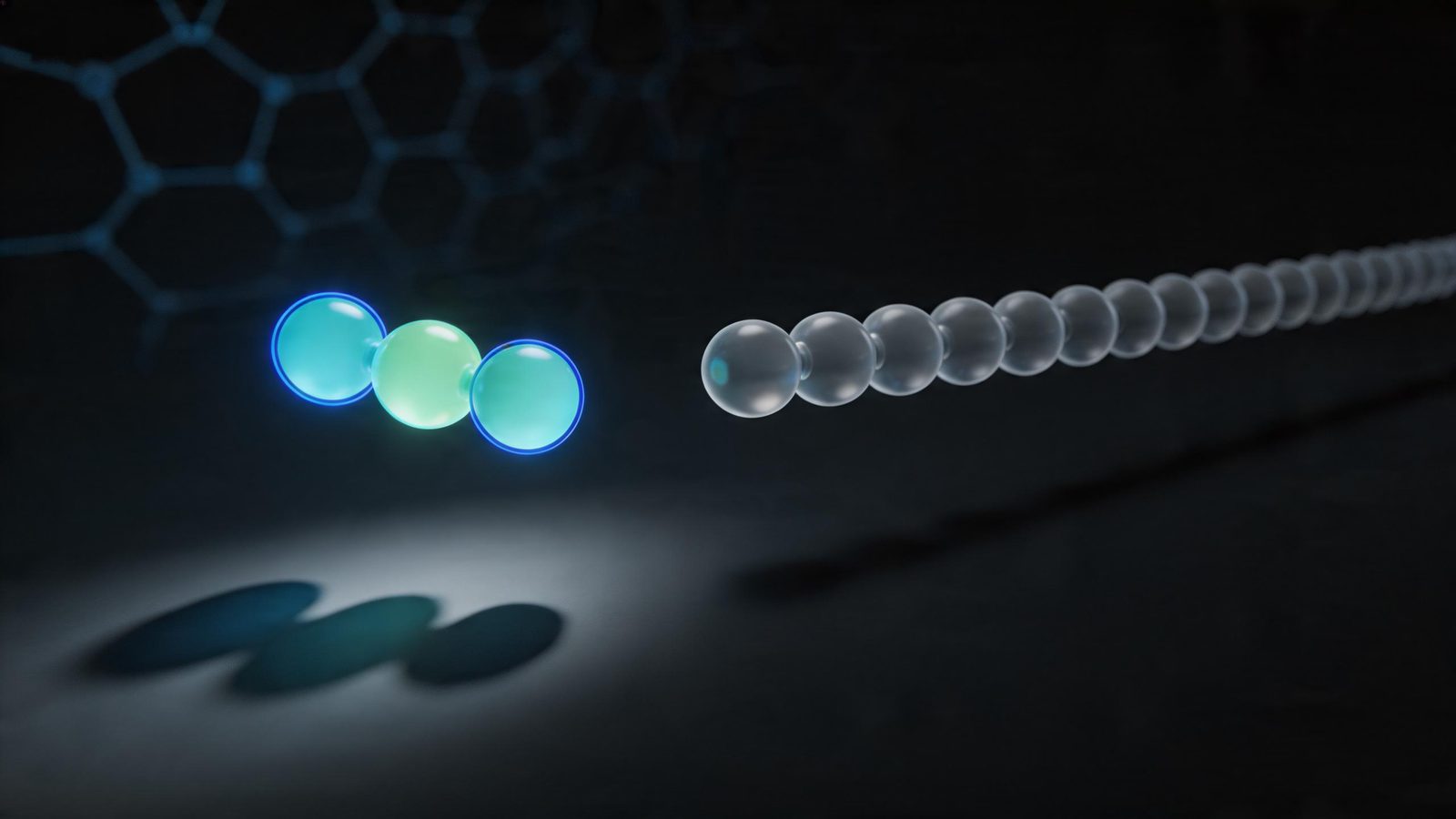
This is the written version of KPV: The Gut Peptide Whose Evidence Is Still Wearing Fur — watch it instead if you’d rather.
In process engineering you learn early that cutting a working system in half almost never leaves you with a smaller working system. Split a distillation column and you do not get two shorter columns; you get scrap. So the thing that first made me look twice at KPV is that it is, quite literally, an offcut — and the offcut kept the useful function.
KPV is three amino acids long. Lysine, proline, valine. The name is the recipe. It is the tail end of a much larger hormone called alpha-MSH, the one your body uses for jobs including skin pigmentation. Somebody snipped off the last three links of that chain, and a good deal of the anti-inflammatory capability turned out to have stayed with the fragment rather than the parent.
That is a strange and interesting result. It is also, as usual, only half the story.
Turning down the foreman
Inside your cells there is a master alarm for inflammation called NF-kappa-B. The way I picture it is a foreman who, the second he smells trouble, starts shouting orders — swell, redden, send everything you have. Useful in an emergency. Ruinous when the alarm never resets, which is roughly what chronic inflammatory disease is.
What the research describes KPV doing is walking in and turning that foreman's volume down. It interferes with NF-kappa-B and MAP-kinase inflammatory signalling rather than shutting the system off. And the detail that got people's attention is the concentration: this happens at nanomolar levels — genuinely tiny amounts, the sort of number that suggests a specific mechanism rather than a blunt chemical effect.
A molecule calming cells in a dish is one thing, though. Getting it to the place that actually hurts is a different engineering problem entirely — and it is where KPV gets clever.
The side door: a loading dock that opens wider during a fire
Your intestinal wall carries a transporter called PepT1 — effectively a loading dock built to haul small peptides into cells whole, rather than breaking them down first. Normally PepT1 is quiet down in the colon. During inflammatory bowel disease, the body cranks it up.
Sit with that for a second, because as a piece of accidental system design it is remarkable: the delivery gate swings open widest precisely where the damage is. And KPV — being three residues long — is small enough to ride straight through it. That is why the oral animal work behaves the way it does. In mouse and rat models of colitis, orally administered KPV was associated with earlier recovery, a better-protected gut lining and lower damage markers. Later work went further and packaged KPV into targeted nanoparticles to steer it at inflamed tissue directly.
Notice what I just said twice, though. Mouse. Rat. Hold that thought.
The bonus nobody expects: it is also an antibiotic
Skin and gut are both barrier organs doing the same fundamental job — keep the outside out — so it is not a large leap that something calming one might calm the other, and lab work on skin cells points that way.
The genuinely odd finding is elsewhere. Alpha-MSH and this little tail fragment are directly antimicrobial. The work here reports activity against heavy hitters including Staphylococcus aureus and the yeast Candida albicans, across a broad concentration range, and — unusually — without suppressing the neutrophils doing the killing.
That combination is rare enough to be worth flagging. Most anti-inflammatories make infections easier, not harder, because damping the inflammatory response is exactly how you damp the immune response. A molecule that appears to do both jobs at once is not what the textbook predicts.
The catch: the evidence is wearing fur
Here is the part that gets left out of the videos selling you on it. Every benefit above — the gut, the skin, the bug-fighting — comes from animal studies and cells in a dish. Robust human trials on KPV essentially do not exist yet. Not "are mixed", not "are early". Do not exist.
Then there is the chemistry, which is the bit I find hardest to look past. Raw KPV is chemically clumsy: it is unstable in solution and degrades fast enough that a substantial share of the published research is not about whether KPV works at all — it is scientists building hydrogels and nanoparticles to keep it intact long enough to arrive. When a meaningful fraction of a field's output is packaging work, that is telling you something about the material.
And legally it sits in a grey zone. KPV was among a small group of peptides that went in front of an FDA advisory committee in July 2026 to determine how, and whether, it can be compounded at all. Worth being precise about what that even means: this process concerns a compounding pathway, not drug approval — the two get conflated constantly. I wrote up what that committee actually decided separately.
So: no approved product, no standardised material, a molecule that falls apart in solution, and a great deal of very confident dosing advice on the internet resting on rodent data. If you are wondering who is checking that any of it is what it claims to be, the answer is covered in why the grey market makes you the QA department — and it is you.
Interesting is not the same as proven. Right now the proof is mostly wearing fur.
The twist: they cut away the tan and kept the fire extinguisher
One last thing, and it is the detail that made this video worth making.
KPV is a fragment of the tanning hormone. You would reasonably expect it to carry some of the parent's pigment activity along with everything else — that is what the parent hormone does. It mostly doesn't. The research indicates a substantial part of KPV's anti-inflammatory effect persists even when the melanocortin-1 receptor — the exact switch alpha-MSH uses to colour skin — is taken out of the picture.
So the anti-inflammatory function and the pigment function are, to a useful degree, separable, and the fragment kept the one and shed the other. That is not witchcraft. That is very good molecular editing, and it is the kind of thing that makes a molecule worth studying properly rather than worth buying quickly.
The bottom line
KPV is one of the more genuinely interesting peptides in this space: a specific mechanism, an unusually elegant delivery route, and a rare anti-inflammatory-plus-antimicrobial combination that the standard model does not predict.
None of which is the same as proven. The human evidence is not thin — it is largely absent. The raw material is unstable. The legal position is unsettled. Those are three separate problems and each one on its own would justify waiting.
Which leaves the question I keep coming back to on this channel: if a compound works beautifully in mice but has not been demonstrated in people, is that a promising therapy or a promising rumour? If you want the same treatment applied to a skin-and-longevity peptide people swear by, the GHK-Cu and Epitalon write-up is the companion piece to this one.
Sources
- Dalmasso et al., “PepT1-mediated tripeptide KPV uptake reduces intestinal inflammation”, Gastroenterology, 2008 — https://doi.org/10.1053/j.gastro.2007.10.026
- Kannengiesser et al., “Melanocortin-derived tripeptide KPV has anti-inflammatory potential in murine models of inflammatory bowel disease”, Inflammatory Bowel Diseases, 2008 — https://doi.org/10.1002/ibd.20334
- Xiao et al., “Orally targeted delivery of tripeptide KPV via hyaluronic acid-functionalised nanoparticles efficiently alleviates ulcerative colitis”, Molecular Therapy, 2017 — https://doi.org/10.1016/j.ymthe.2016.11.020
- Sun et al., “Hydrogel-based stabilisation of the tripeptide KPV” (KPV solution instability; TNBS colitis in rats), ACS Biomaterials Science & Engineering, 2021 — https://doi.org/10.1021/acsbiomaterials.1c00792
- Cutuli et al., “Antimicrobial effects of alpha-MSH peptides” (α-MSH and its C-terminal tripeptide KPV against S. aureus and C. albicans), Journal of Leukocyte Biology, 2000 — https://doi.org/10.1002/jlb.67.2.233
Educational and research purposes only — not medical advice. Peptide Corner does not recommend any vendor, source, or dose. Keep safe, keep skeptical.

GHK-Cu And Epitalon: What The Evidence Actually Says About Copper Peptides And Telomeres
The copper peptide and the telomere peptide, graded honestly — real mechanisms, a database lookup masquerading as 4,000 effects, and a Russian trial record nobody has replicated.

FDA vs FDA: Why the Advisory Panel Overruled the Agency’s Own Scientists
The committee overruled the FDA’s scientific reviewers on six of seven peptides — and rejected the seventh. Inside the arguments, the one rejection that proves it wasn’t a rubber stamp, and why a vote is not a rule.
Why the Peptide Gray Market Makes You the QA Department
“Research use only” is not a quality standard — it is the mechanism that moves the entire quality function from an inspected factory onto the buyer.